How to Start a Solar Energy Business in India
India’s power needs are growing fast, and many homes and businesses are turning to solar to manage electricity costs. As utility tariffs rise and solar systems become more affordable, starting a solar-related venture has become a practical option for small business owners.
If you are thinking about solar panel businesses, there are several ways to enter the market, from installing rooftop systems to supplying equipment or taking up larger projects. Access to financing, including loans for solar power plant funding, also makes expansion easier once the business gains traction.
Here is a clear, realistic guide to starting a solar energy business in India.
Why Solar Energy Business in India Is Expanding
A few simple factors are pushing demand:
- Higher electricity bills
- Lower cost of solar panels and inverters
- Interest in backup and reliable power
- Awareness of long-term savings
- Growth in commercial rooftop adoption
Because of this, demand exists across residential, commercial, and industrial segments.
Step 1: Select a Solar Business Model
Solar work covers different activities. Choosing one helps control investment and learning time.
Rooftop installer
Investment: ₹2-8 lakh
Dealer or distributor
Sell panels, inverters, and accessories.
Investment: ₹3-10 lakh
Project contractor (EPC)
Handle commercial or industrial solar projects.
Investment: ₹10 lakh+
Solar plant owner
Build and run a power-generating plant.
Investment: ₹50 lakh+
Most new entrepreneurs start with installation or dealership because setup is simpler and projects come faster.
Step 2: Register and Set Up the Business
Basic registration is required to operate smoothly and work with customers or institutions:
- Proprietorship, LLP, or Private Limited
- GST registration
- MSME (Udyam) registration
- Electrical contractor license
For grid-connected rooftop work, empanelment with the local DISCOM helps customers get net-metering approval.
Step 3: Learn Practical Technical Basics
Even if technicians handle installation, the business owner should understand system fundamentals:
- Estimating electricity load
- System size selection
- Panel direction and tilt
- Inverter choice
- Safety practices
Many equipment suppliers provide short training sessions that help new installers start confidently.
Step 4: Build Supplier Relationships
Consistent material quality protects your reputation. A basic vendor network usually includes:
- Solar panel supplier
- Inverter supplier
- Mounting structure fabricator
- Electrical components distributor
Working with dependable suppliers reduces failures and service complaints.
Step 5: Arrange Financing Options
Capital helps both the business and customers. Common funding routes include:
- MSME business loans
- Equipment finance
- Working capital facilities
- Project funding
- Customer EMI plans
Availability of loan for solar power plants or rooftop financing makes it easier for customers to adopt solar, which increases project flow.
Step 6: Find Customers and Projects
Getting consistent leads is often the toughest part early on. Practical channels include:
Google Business listing
Referrals from electricians and builders
Housing society meetings
Visits to shops and factories
Simple awareness sessions on savings
Explaining expected bill reduction and payback time usually helps customers decide.
Step 7: Focus on Quality and Service
Initial installations build market trust. Important practices:
- Correct system sizing
- Neat installation work
- On-time completion
- Proper documentation
- Responsive after-sales support
Satisfied customers often bring referrals, which become a major growth source.
Step 8: Move Into Larger Projects
After steady residential work, many businesses take up commercial rooftops. These projects are bigger and require:
- Skilled technicians
- Site planning
- Safety compliance
- Supplier credit support
This stage increases revenue and experience.
Step 9: Consider Solar Plant Ownership
With experience and funds, some entrepreneurs invest in their own solar assets. Typical options:
- Captive plant for an industry
- Open-access project
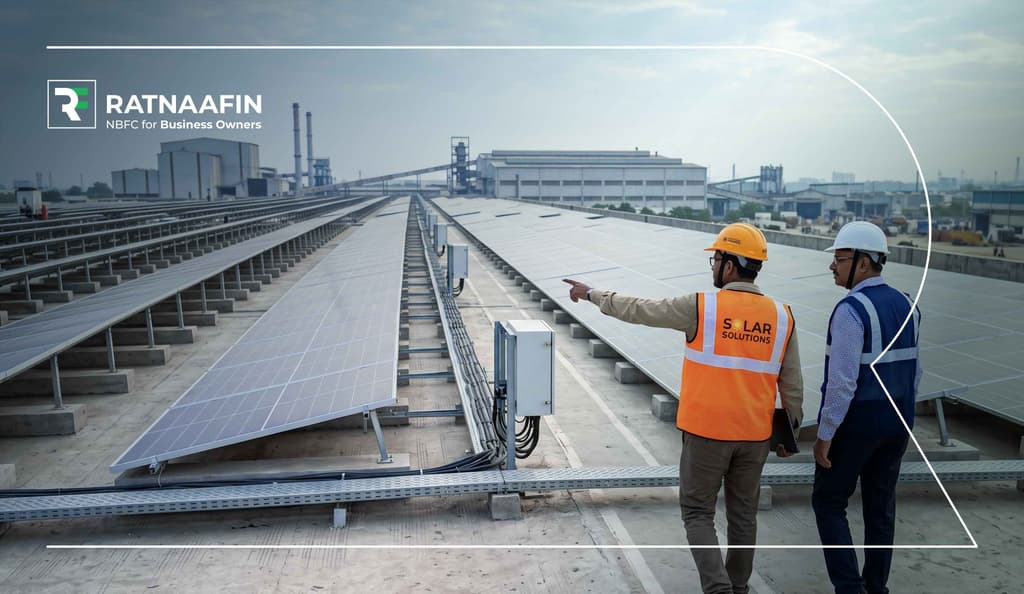
- Ground-mounted solar farm
Income then comes from selling electricity rather than installation work alone.
Cost to Start a Solar Business in India
Approximate starting ranges:
- Small installer: ₹2-5 lakh
- Dealer/distributor: ₹3-10 lakh
- Project contractor: ₹10-25 lakh
- Solar plant developer: ₹50 lakh+
Actual cost depends on tools, staff, and project size.
Profit Outlook
Earnings vary by activity:
- Residential installation: steady but smaller margins
- Commercial projects: higher per-project margin
- Solar plant: stable long-term income
Businesses usually become consistently profitable once project flow stabilizes and supplier terms improve.
Financing Support for Solar Business Growth
As solar businesses expand from small rooftop installations to larger commercial or plant-level projects, access to structured financing becomes increasingly important. Working capital is needed for inventory, tools, staff, and project execution, while customers often require funding to adopt solar systems.
NBFCs such as Ratnaafin support this ecosystem by offering tailored MSME loans, equipment finance, and solar project funding solutions suited to emerging installers, EPC contractors, and dealers. Availability of such financing helps entrepreneurs take up larger projects, improve cash flow cycles, and scale operations without heavy upfront capital strain.
For many growing solar businesses in India, structured funding partnerships act as a practical bridge between early-stage installations and long-term project expansion.
Final Thoughts
Starting a solar energy business in India is achievable with moderate investment and practical skills. Many firms begin with small rooftop installations and gradually take up larger projects or develop solar assets.
With reliable execution, trusted suppliers, financing support, and good customer relationships, solar can grow into a stable and scalable business over time.