Solar Panel Subsidy in India: How Much Can You Actually Save in 2026?
Electricity costs in India have risen steadily over the years, prompting more homeowners and small businesses to explore rooftop solar. The advantage today is that the government is actively subsidising the transition. With the latest solar panel subsidy in India, installing a rooftop system in 2026 has become more affordable than ever.
This guide breaks down exactly how much you can save, who qualifies, and how to claim the benefit.
Why Going Solar in 2026 Makes Sense
A well-sized rooftop solar system can reduce your monthly electricity bill by 70–90%, and in many cases bring it down to zero. The central government's PM Surya Ghar Muft Bijli Yojana has made the solar system for home in India government subsidy one of the most generous renewable energy schemes in the country.
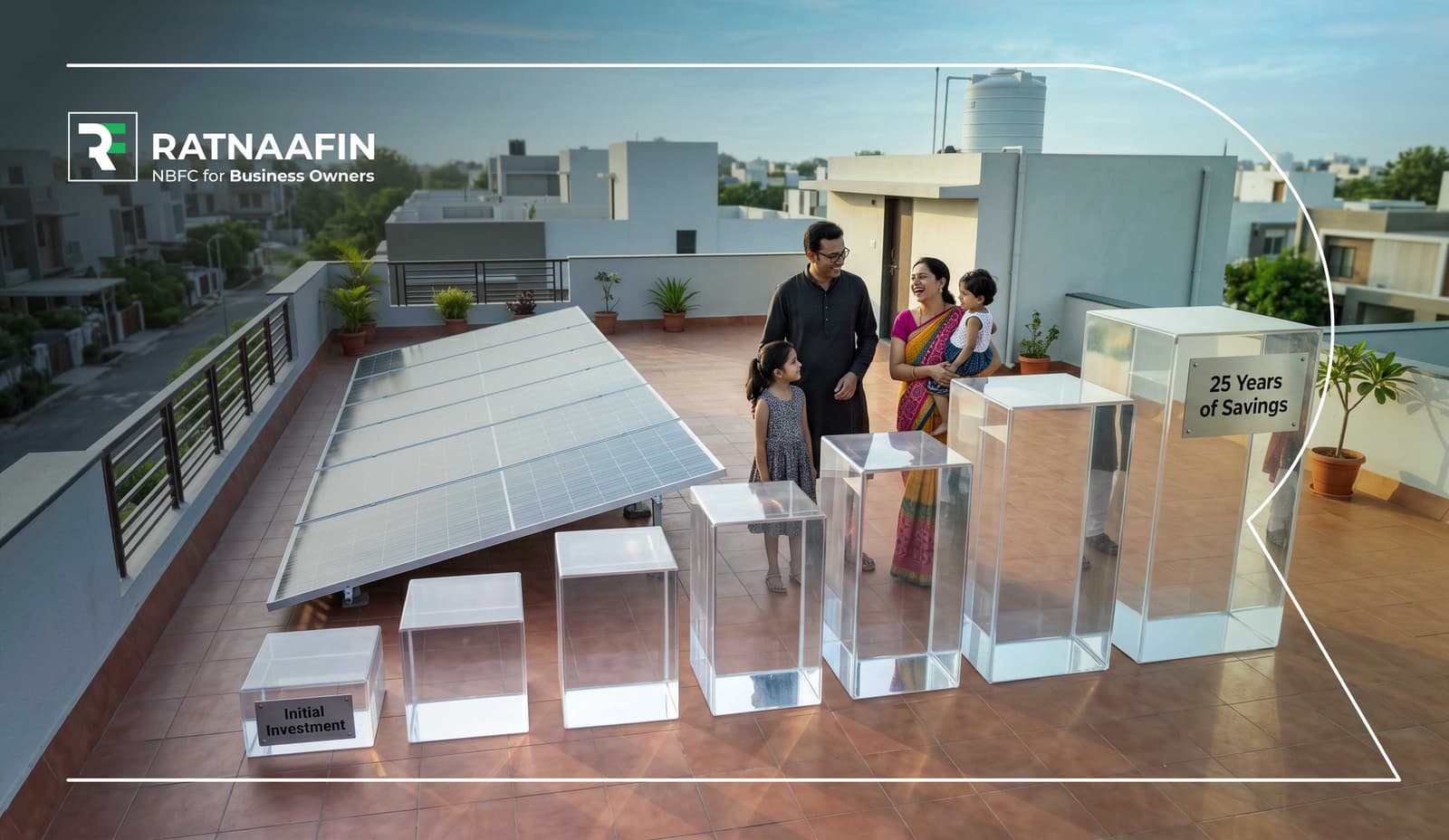
A typical solar setup lasts 25 years and pays for itself in just 4 to 6 years, after which you essentially enjoy free electricity for two decades.
Current Solar Panel Subsidy Structure
Under the PM Surya Ghar scheme, the rooftop solar subsidy in India is paid directly to residential users:
| System size | How it is calculated | Central subsidy |
| 1 kW | ₹30,000 per kW for the first 2 kW | ₹30,000 |
| 2 kW | ₹30,000 per kW for the first 2 kW | ₹60,000 |
| 3 kW | ₹60,000 for the first 2 kW + ₹18,000 for the third | ₹78,000 |
| 4 kW and above | Capped at 3 kW | ₹78,000 |
** 5 kW or 10 kW system receives exactly the same ₹78,000 as a 3 kW system. Capacity beyond 3 kW earns no additional central subsidy.
Whether you live in a compact flat or a larger independent home, there is a subsidy tier suited to your need.
How Much Will You Actually Spend?
Here are realistic numbers for an Indian household.
For a 3 kW Rooftop System
- Total installation cost: ₹1,80,000 to ₹2,10,000
- Government subsidy: ₹78,000
- Final out-of-pocket cost: ₹1,02,000 to ₹1,32,000
A 3 kW system generates around 360–450 units per month, sufficient to power a small family's lighting, fans, refrigerator, television, and air conditioner.
For a 2 kW System
- Total cost: ₹1,20,000 to ₹1,40,000
- Subsidy: ₹60,000
- You pay: ₹60,000 to ₹80,000
This option fits smaller homes and apartments with limited rooftop space.
Who Is Eligible for the Solar Panel Subsidy?
The scheme is available to Indian residents who:
- Own a property with a rooftop suitable for solar installation.
- Have a valid electricity connection in their name.
- Have not previously availed any other solar subsidy.
Apartment residents may require a No Objection Certificate from the housing society.
How to Apply for the Subsidy
The application process is transparent and largely online:
- Register on the National Portal for Rooftop Solar (pmsuryaghar.gov.in).
- Select an empanelled vendor in your state.
- Get the system installed and inspected by your local DISCOM.
- The subsidy is credited directly to your bank account, typically within 30 days.
There are no intermediaries, no hidden steps, and no in-person visits required.
State Wise Subsidies
| State / UT | Central subsidy | State top-up | Total possible (3 kW) | Notes |
| Uttar Pradesh | ₹78,000 | ₹15,000/kW, max ₹30,000 | ~₹1,08,000 | Via UPNEDA; most consistently reported top-up |
| Rajasthan | ₹78,000 | ₹17,000 flat | ~₹95,000 | Limited to Mukhyamantri Nishulk Bijli Yojana beneficiaries |
| Delhi | ₹78,000 | Capital subsidy + generation incentive | Varies | Reported at ₹3 per unit generated for 5 years — verify |
| Maharashtra | ₹78,000 | ₹10,000–₹20,000 | Varies | Eligible categories only |
| Bihar | ₹78,000 | ₹10,000/kW, max ₹20,000 | ~₹98,000 | Verify with BREDA |
| Gujarat | ₹78,000 | Disputed | Varies | Sources report ₹10,000/kW, ₹40,000, and that the general scheme has closed. Confirm with GEDA before publishing any figure |
| Haryana | ₹78,000 | Income-targeted only | ₹78,000 for most | No general top-up; enhanced support for Antyodaya households |
| Most other states | ₹78,000 | None | ₹78,000 | Majority of states run no general top-up |
Don't Have the Upfront Money? You Have Options
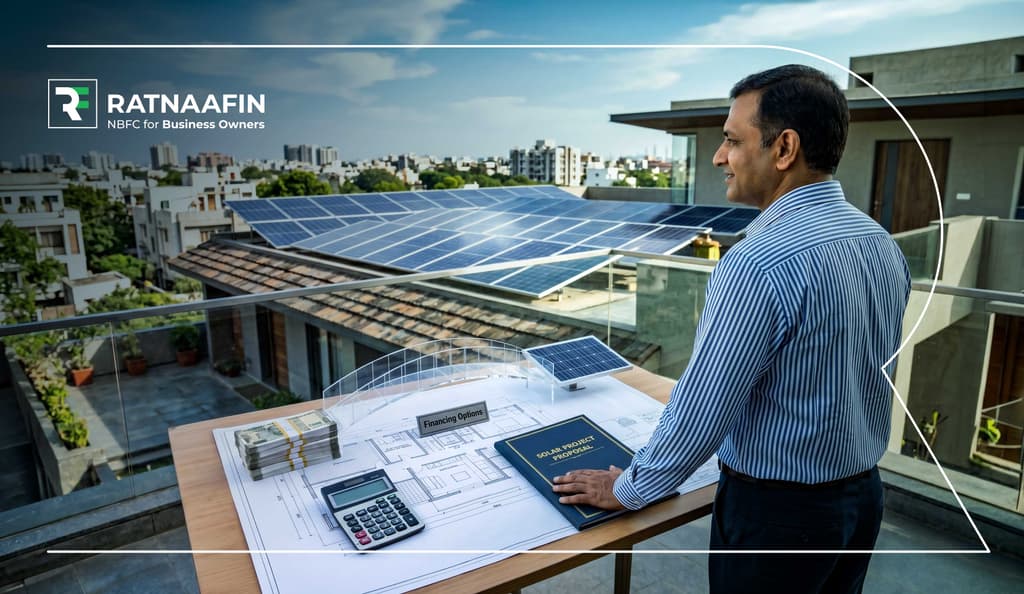
Even after the subsidy, the remaining ₹60,000 to ₹1.3 lakh can feel substantial when paid at once. This is where structured financing helps. With a Solar Loan, Business Loan, or Working Capital Loan from Ratnaafin, individuals and business owners can fund the balance comfortably through manageable EMIs.
At Ratnaafin, we make financing simple so you can adopt solar without straining your cash flow.
Final Thoughts
The 2026 solar panel subsidy in India is one of the smartest financial moves a homeowner or business can make. You reduce energy costs, increase property value, and recover your investment in just a few years, while contributing to a cleaner future.
Frequently Asked Questions
You can finance your rooftop solar installation through a lender while also applying for the subsidy under the PM Surya Ghar: Muft Bijli Yojana, provided you meet the scheme's eligibility conditions. Once the installation is approved and commissioned, the subsidy is released according to the government's guidelines.
The portal shows the progress of your application, including feasibility approval, installation, inspection, commissioning, and subsidy disbursement. If additional information is required, your DISCOM or the portal will notify you during the process.
- Are an Indian citizen.
- Own a house with a suitable rooftop for solar installation.
- Have a valid residential electricity connection.
- Install the system through the approved process under the scheme.
- Have not already claimed a rooftop solar subsidy for the same household.