Women Entrepreneurs and MSME Loans: Breaking the Gap Between Policy and Reality
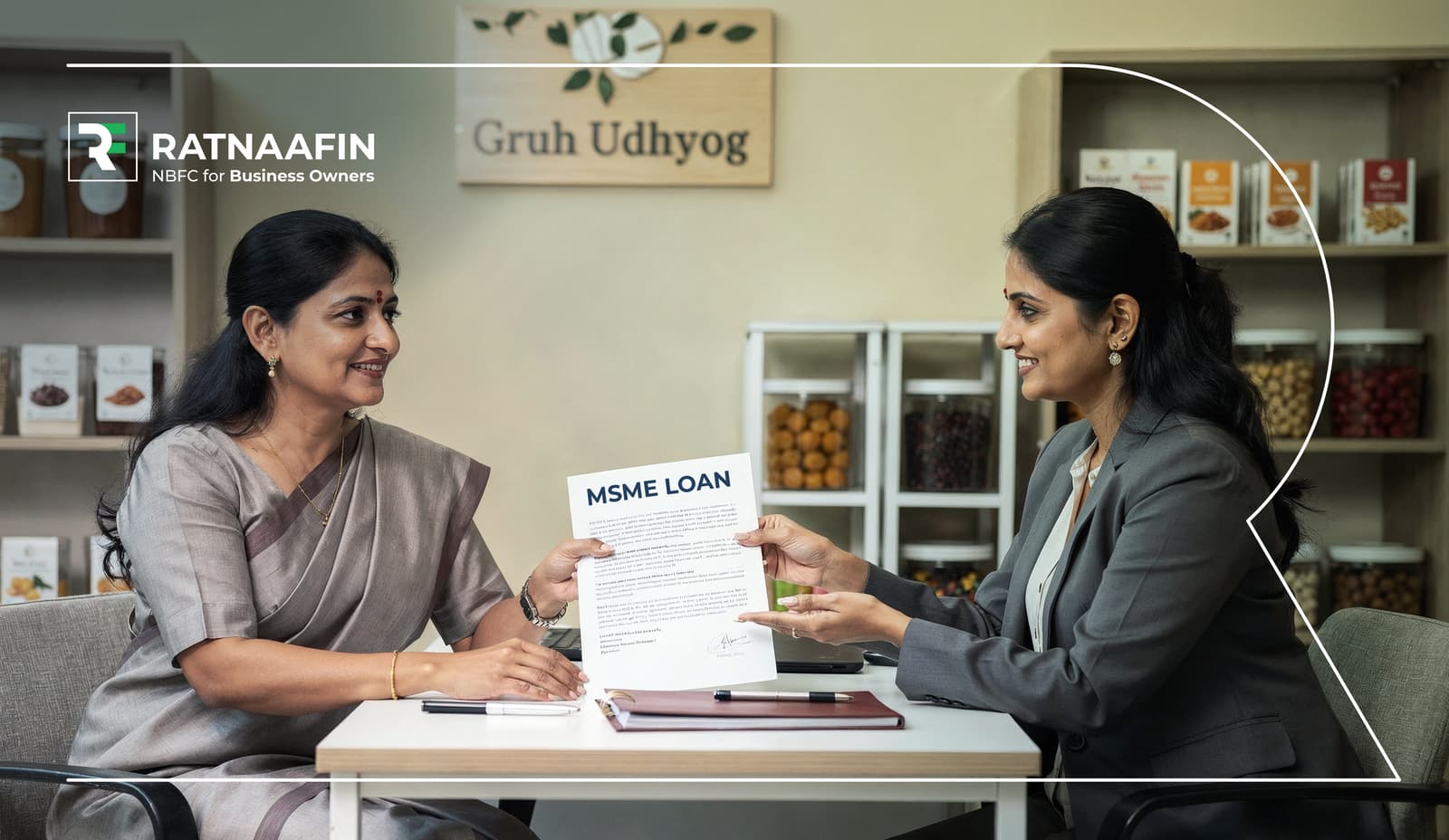
India's policy framework for women entrepreneurs looks spectacular on paper. MUDRA loans. Stand-Up India. CGTMSE guarantees. Multiple MSME schemes for women. Ministers tweeting about empowerment.
Meanwhile, only 1 in 14 women entrepreneurs actually accesses a formal MSME loan for women entrepreneurs.
This isn't a gap. It's a chasm. And it's not happening because women can't build businesses; rather it’s happening because the financial system is still assessing women entrepreneurs loans like it’s 1987.
The Lazy Lending Problem Nobody Wants to Name in MSME Loans for Women
Here's what rejection looks like in practice:
A woman runs a ₹60 lakh annual turnover textile unit in Surat. Repeat clients. Consistent orders. She needs ₹15 lakhs for working capital through an MSME loan for women.
"Three years of audited financials?" She's been operating for 18 months.
"Property as collateral?" It's in her husband's name.
"Credit score?" She's never held a credit card in her own name.
Application denied. Not because her business is weak, but because the women entrepreneurs loan assessment framework is broken.
This isn't conservative lending. It's lazy lending. It's easier to apply the same checklist to everyone than to evaluate whether a business actually generates cash and can service debt.
Most banks choose the checklist.
The Data They're Ignoring on Women Entrepreneurs Loan Performance (Because It's Inconvenient)
Women-led MSMEs show 30–50% lower NPA rates than male-led businesses. Women repay 2–3 weeks ahead of schedule on average. Superior financial discipline across every metric relevant to MSME loans for women entrepreneurs.
Yet this performance translates into zero advantages in credit access.
The better credit risk gets worse access. Not because lenders lack data—they have it—but because changing assessment models requires effort. So, they keep using property ownership and three-year tax records as proxies, knowing these systematically exclude women entrepreneurs from formal MSME loans.
The cost? Thousands of scalable businesses stay stuck. Businesses that could employ five people employ one. Not because the market isn't there—but because capital for women entrepreneurs isn't.
That's bad economics.
What Actually Changes the Game for MSME Loans for Women Entrepreneurs
Some NBFCs have stopped pretending the old model works.
Instead of "What collateral do you have?" they ask: What's your monthly cash flow? How many repeat customers? Show me six months of bank statements.
This isn't revolutionary. It's basic MSME loan underwriting for women entrepreneurs, focused on what determines loan repayment.
But in an industry obsessed with property pledges, basic becomes radical.
Collateral-free structures
Collateral-free loans for women entrepreneurs redefine who gets to play. When lenders stop demanding property, women without inherited assets aren't automatically disqualified.
But only if they genuinely assess cash flow, not just replace property collateral with demands for a husband's personal guarantee. That's the same gatekeeping with different paperwork.
Flexible repayment structures
Flexible repayment structures matter for MSME loans for women because cash flow isn't linear.
A boutique makes 40% of revenue in the wedding season. A coaching class earns differently in summer. Fixed EMI schedules that ignore these patterns don't reduce risk; they create defaults.
Digital-first processes
Digital-first MSME loan processing for women entrepreneurs compresses 45-day approvals into 7–14 days. For women running tight operations, that's not convenient; that's the difference between accessing capital and giving up.
The Lenders Who Actually Get MSME Loans for Women
Here's the test: Does a lender treat women entrepreneurs as a CSR checkbox, or have they rebuilt assessment models around how women-led businesses actually function?
Some NBFCs say they support women, then demand the same documentation as banks. Others, like Ratnaafin, have rethought the entire approach to MSME loans for women entrepreneurs. Not because of diversity initiatives, but because the data screams: women entrepreneurs are excellent credit risks being systematically underserved.
Ratnaafin's premise is simple: a woman running a salon, manufacturing unit, or retail operation has different cash flows than a salaried borrower. So, build loan structures around actual business realities.
What that means practically:
Approvals in 48–72 hours.
Transparent processes.
Real flexibility for seasonal businesses.
This isn't altruism. This is competent, modern MSME lending.
What You Actually Need to Know Before Applying for an MSME Loan for Women
Your numbers tell the story.
Monthly sales consistency, customer acquisition cost, repeat purchase rate, inventory turns. Articulate these financially, not emotionally. Most women pitch passion when they should pitch unit economics.
Documentation gaps are bridgeable, start now.
Six months of bank statements. GST returns if applicable. Udyam registration. Aadhaar + PAN. That's often sufficient for **women entrepreneurs loans**.
Timing matters.
Apply during off-peak when cash is available for EMIs, not when it's tied up in inventory.
Interest rates vary wildly.
Women-focused MSME loans range **from 10% to 16% annually**. A 2% difference on ₹20 lakhs over 3 years costs ₹60,000+.
The lender matters more than the loan.
Find lenders whose systems actually serve women entrepreneurs, not just talk about it.
Why This Still Matters for MSME Loans for Women Entrepreneurs
Policy has evolved. The constraint now isn't government schemes; it's institutional execution.
Some lenders have genuinely modernized. Others added “women entrepreneur loans” to their website while running the same old playbook.
Your job is to tell the difference.
Because when a woman entrepreneur gets capital from a lender who actually understands her business—not as a special case, but as a viable credit opportunity—she scales. She hires. She reinvests.
India's next growth wave isn't coming from entrepreneurs we're already funding well. It's coming from the 13 out of 14 women entrepreneurs building businesses right now—with or without formal credit.
They're already succeeding.
The question is: How much faster could they build if MSME loans for women actually caught up?
Some lenders are running to find out. Others are still filling out forms.
Choose accordingly.