Overdraft Facility Meaning: How a Business Overdraft Loan Works
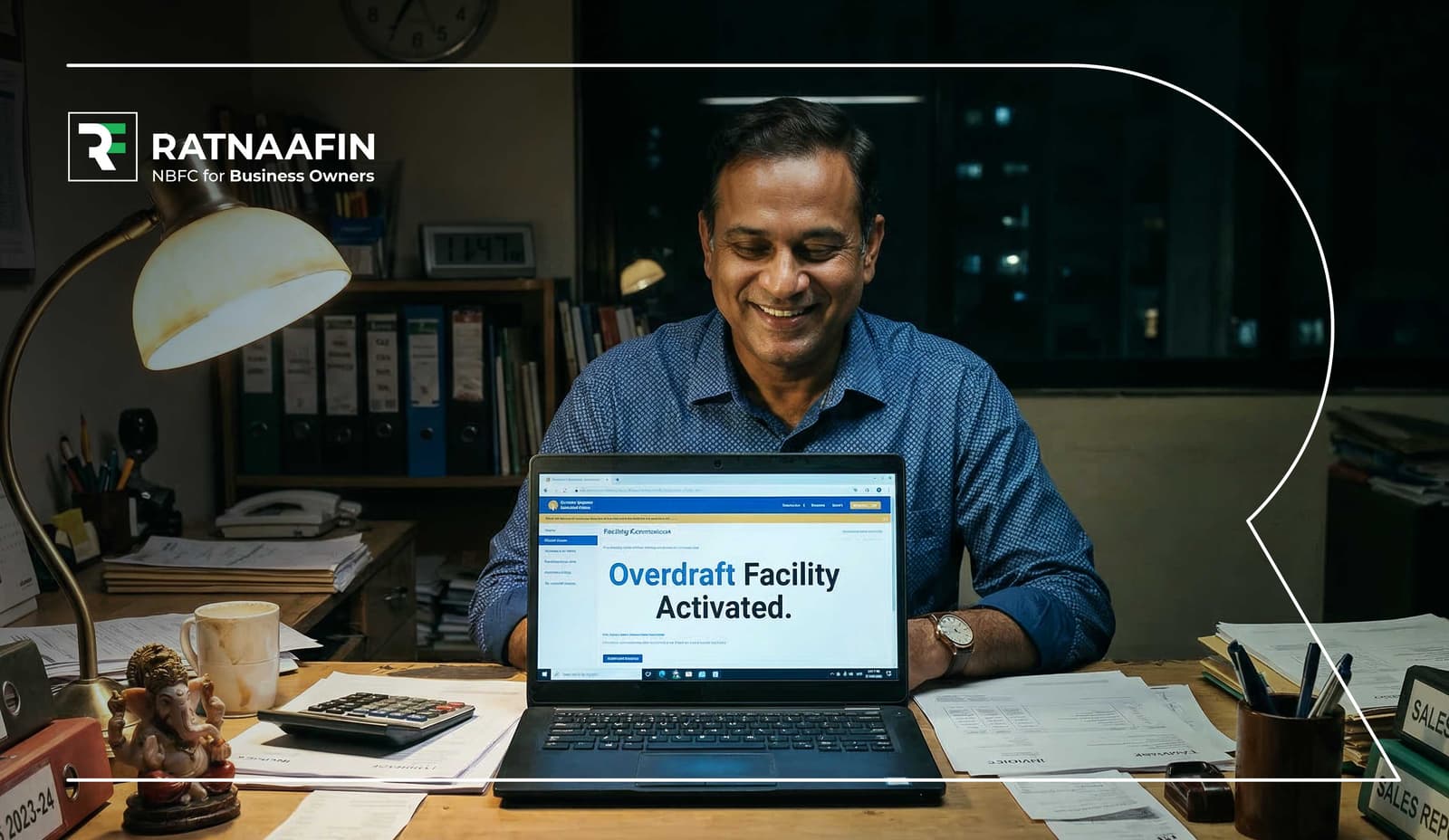
Cash flow issues are quite common among most fast-growing companies at some stage, whether it be due to seasonal cash shortage or unexpected expenses. Having an overdraft facility means that you can instantly get additional money, which will enable you to continue your operations without any significant interruptions. Here, we are going to discuss the overdraft facility meaning, types, functioning, and advantages.
What is an Overdraft Facility?
An overdraft facility is a banking service that gives you the option to take out more funds from your account than the actual balance you hold in it. In fact, it works as a credit line that you can use up to the limit approved.
Types of Overdrafts
With banks, you basically get two main types of business overdraft facility:
Pre-arranged Overdrafts
A credit limit that is set in advance, depending on your creditworthiness and your relationship with the lender.
Instant Overdrafts
These are very small overdrafts that are only provided at the time of the transaction if you have an insufficient balance.
| Facility | Secured against | Typical use |
| Overdraft against property | Commercial or residential property | Largest limits, lowest rates, longest processing |
| Overdraft against fixed deposit | Your own FD | Quick, cheapest, limit capped by deposit value |
| Cash credit (CC) | Stock and book debts | Classic working capital facility for traders and manufacturers |
| Unsecured business overdraft | Nothing; cash-flow based | Smaller limits, higher rate, fastest to set up |
How It Works in Practice
If your bank agrees on an overdraft limit, you can go over a zero balance. The interest will only be charged on the portion you use, and generally it is calculated every day. The major benefit is that when you put money into your account, it will automatically reduce the overdrawn amount.
Key Benefits of a Business Overdraft Loan
A business overdraft loan facility brings along numerous benefits:
Meeting urgent needs:
It enables businesses to pay the bills, salary, or even supplier's payments when the cash is low temporarily.
Maintaining credit health
By making sure that EMIs and bills are paid on time with the help of overdraft, you not only avoid late payment fees but also maintain a good credit score in the long run.
Repayment is not fixed
It is the natural inflow of money that determines the repayment, and not one fixed date every month.
Don't need collateral:
Most overdraft facilities are given based on one’s financial behavior and record of transactions rather than the assets that one pledges.
Overdraft Loan Eligibility for Business
An overdraft loan eligibility for business is mainly determined by the following factors:
Credit Score
A good record indicates that you are financially disciplined.
Income Stability
Banks prefer a stable source of income in the past 6 to 12 months.
Existing Relationship
It is essential to have a good track record with the bank, including average balance maintenance.
Professional Profile
Besides, your business and personal reputation are taken into consideration.
How to Apply
Leading finance companies offer both online and offline options. Steps to be followed are:
Check Eligibility
Assess your income, turnover, and credit history against the lender’s requirements.
Apply Online
Visit the financial institution’s website and navigate to the overdraft section.
Submit Documentation
Provide necessary proof, such as bank statements, ID, and income tax returns.
Approval Process
The lender will evaluate your creditworthiness after you have handed in the application. Upon approval, the bank will establish your overdraft limit.
Instant Overdraft Facility
Many banks are providing instant overdraft facilities over the internet within a matter of minutes.
Activate Your Overdraft
Generally, you will be required to consent to the bank's terms and conditions before being able to use your overdraft.
How Your Overdraft Limit Is Calculated
Lenders don't pick a limit from your turnover alone. For a secured facility, the limit is tied to what you've pledged, and for cash credit it moves month to month.
Drawing power. For a cash credit facility secured against stock and receivables, your sanctioned limit is a ceiling — but what you can actually draw on any given day is your drawing power, calculated from current stock and book debts after a margin is deducted.
Margin. The lender funds only part of the value of your stock and receivables; you fund the rest. Margins commonly run 25% on stock and 25–40% on book debts, with older receivables excluded entirely.
A worked calculation:
| Value | Margin | Eligible | |
| Stock | ₹30,00,000 | 25% | ₹22,50,000 |
| Book debts under 90 days | ₹20,00,000 | 40% | ₹12,00,000 |
| Book debts over 90 days | ₹8,00,000 | Excluded | ₹0 |
| Drawing power | ₹34,50,000 |
If your sanctioned limit is ₹40 lakh, you can draw up to ₹34.5 lakh this month — the lower of the two figures always applies.
Is It a Good Fit?
Yes, of course, an overdraft can be very useful in case of temporary cash shortages if you want to get quick funding. If you are looking for a partner to help you through short-term cash flow problems, come to Ratnaafin today. Experience customer-friendly support and transparent terms that are designed exclusively for your business needs.