MSME Payment Rule Explained: The 45-Day Payment Rule and How It Protects Businesses
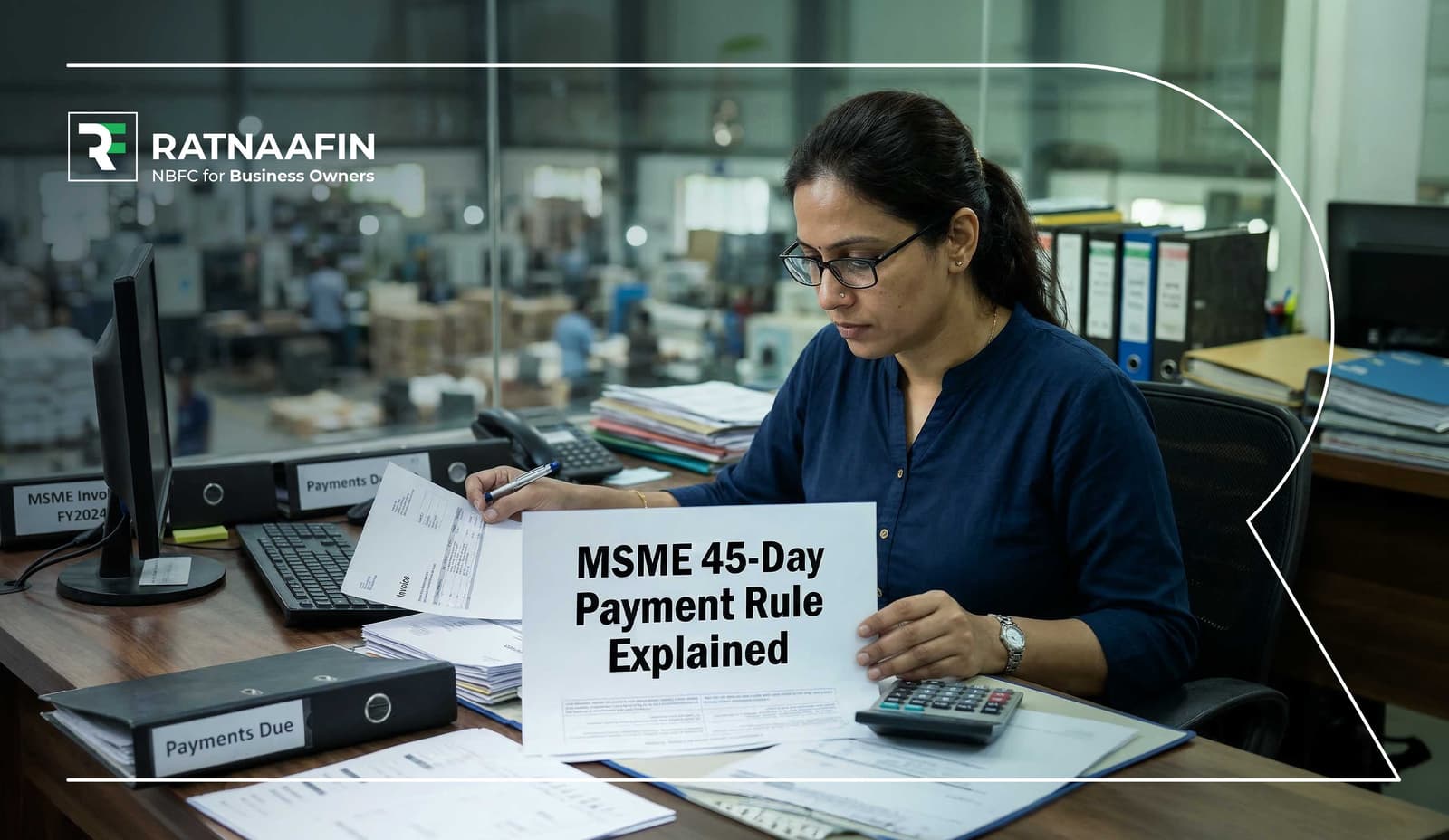
The MSME payment rule, commonly known as the 45-day payment rule, is a legal requirement under the Micro, Small and Medium Enterprises Development (MSMED) Act, 2006. This regulation requires all MSME goods and services buyers to pay MSME suppliers within a given time period, i.e, 45 days. This tenure is accounted from the date of deemed acceptance of goods & services according to the payment regulations.
If any buyer does not comply with this rule, they will be liable to pay the interest on the outstanding unpaid amount at 3 times the bank rate of the Reserve Bank of India (RBI).
This new rule was introduced to address one of the common issues faced by the MSME sector, i.e., ‘always buried in a delayed payment system.'
Since we all know that cash flow is the lifeline of every small business, any stuck cash flow hinders any form of reinvesting, covering basic operation costs, and paying wages. This way, it would not just affect the small business but also the upstream and downstream economies.
Finance Act 2023 Amendment and Why the MSME Payment Rule Matters
The Finance Act 2023 further strengthened this MSME payment rule, and it was done by linking it directly to income tax compliance. Under this amendment, payments owed to micro and small enterprises must be cleared within 45 days in order to claim them as deductible business expenses.
If the payment is delayed beyond the permitted period, the expense may be disallowed under income tax rules until the payment is actually made. This change has made timely MSME payments critical for businesses if they want to avoid tax complications and maintain financial compliance.
How the 45-Day MSME Payment Rule Works in Practice?
Here is a simple example to help you understand the timeline better:
Event | Example Date |
| Invoice issued by MSME supplier | 1 March |
| Goods/services accepted | 3 March |
| Payment deadline under the MSME payment rule | 17 April (within 45 days) |
In this case, if the buyer fails to pay the amount by 17 April, they may attract interest at 3 times the RBI bank rate. It must be noted that this may also have possible tax implications.
How Businesses Can Stay Compliant With the MSME Payment Rule?
In order to avoid legal disputes and tax disallowances, every business should create a robust payment compliance process. Here is a simple method to help you.
1. Identification and verification of MSME suppliers
Before accepting any vendor, you should do the following:
- Ask for their Udyam Registration Certificate and verify the same through the Udyam portal.
- Maintain proper records for future audits.
2. Include payment terms in your contract.
Always clearly define
- Date on the invoice (to know when the 45-day countdown begins?)
- Timelines and payment mode.
- Any penalty clauses are aligned with the MSMED ACT.
3. Automate payment tracking.
Make sure to use an ERP or accounting system for
- Tracking due dates according to the invoice date.
- Create alerts for payments reaching 45 days limit.
- Mark your MSME vendor as a high priority to eliminate any errors.
4. Maintain records
In case of any audit or disputes, make sure you have
- Records of payment confirmation.
- Signed deal agreements showing clear timelines.
- Time-stamped proof of receipts.
5. Appoint a compliance owner
Assign someone from legal or finance to oversee
- Adherence to MSME payment.
- Risk assessment of tax disallowance.
Timely reporting of pending MSME dues.
Tax Implications of Delayed MSME Payments
Under the Finance Act 2023, businesses cannot claim tax deductions for expenses related to purchases from MSMEs if payments are delayed beyond the permitted period.
Key points include:
- Payments must be cleared within 45 days from the date of acceptance.
- If payment is delayed, the expense becomes disallowed under Section 43B of the Income Tax Act.
The deduction can only be claimed in the financial year when the payment is actually made.
This provision encourages businesses to maintain timely payments and strengthens financial discipline in transactions with MSMEs.
How does the new MSME payment within 45 days rule protect your business?
Businesses are enjoying various advantages from MSME payment rules, even if this seems like an add-on burden. Here is how:
1. Improved reputation
Compliance shows the responsibility of company and ensures ethical business practices. It elevates the company’s image and strengthens the association with government authorities, investors, and MSMEs.
2. Improved supply chain
If your payments are timely, then it will regulates MSME cash flow, offering more consistent and reliable supply.
3. Tenders and regulatory compliance
Now, government tenders also require clear evidence of the MSME payment rule. Timely payment will increase your chances of getting the new business.
4. Strong business relations
Not getting trapped in the MSME delayed payment system offers trust, loyalty, and confidence. If payments are released timely, it will allow both parties to pursue a long-term relationship, which is much needed during periods of supply chain disruptions or demand gain.
5. Avoiding legal actions and interest
Not following the MSME payments rule will attract a high interest rate, i.e., 3 times the RBI’s interest rate, and there is also a possibility of strict legal action. Making payments timely means a business can avoid negative consequences of litigation and paying penalties.
Conclusion
MSME 45 days payment law under the Finance Act 2023 plays a significant step for supporting micro and small businesses by making sure that they get payments within 45 days. This rule helps to alleviate any storage of working capital for MSEs, reducing payment disputes and enhancing their bargaining power. For big business, complying with this rule means improved tax planning and building a more compliant and transparent business environment.
Frequently Asked Questions
Yes, it strengthens your negotiation position by enforcing a legal payment timeline and penalties for delays.