How to Read or Decode SME Loan Sanction Letter
Decoding SME Loan Sanction Letter
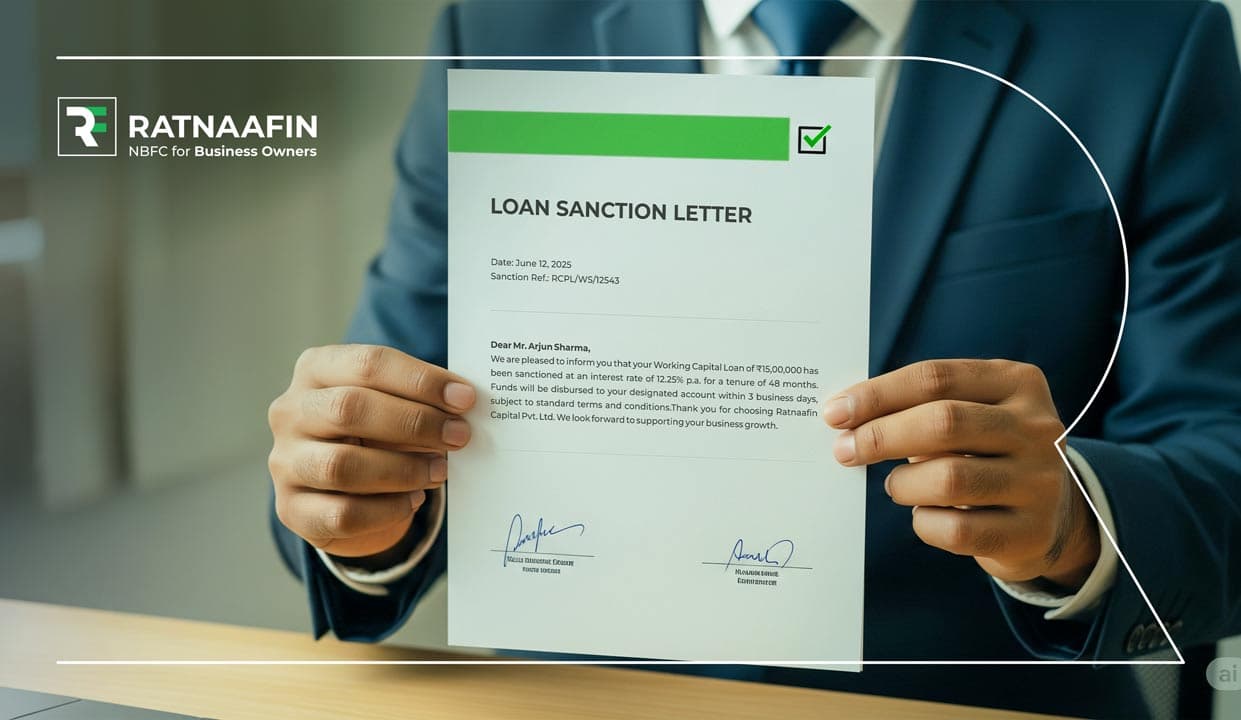
A sanction letter is a formal document issued by a financial institution, such as a bank or lender, confirming their approval to grant a loan to an individual or entity. This letter outlines the terms and conditions of the loan, including the loan amount, interest rate, repayment schedule, and any other relevant details.
Decoding a sanction letter involves understanding the key information provided in the document. Here are the typical components of a sanction letter and how to interpret them:
Points to Review in the Sanction Letter
A. Sanctioned Amount and Type of Loan
- Check the type of facilities applied for, including Fund-Based and Non-Fund-Based limits, and verify the sanctioned loan amount.
a. Fund-Based Facility:
- Term Loan
- Cash Credit or Overdraft
- Finance for Inland Bill Purchase & Bill Discounting
- Export Packaging Credit Facility
- Loan against property (LAP)/ Housing Loan
- Loans against Securities
- Loans against fixed deposits
b. Non-Fund Based Facility:
- Bank Guarantee:
- Performance Bank Guarantee: Ensures compensation in case of inadequate or delayed performance on a contract.
- Financial Bank Guarantee: Ensures debt repayment in case of borrower default.
- Letter of Credit: Both Domestic LC and Import LC for procurement of goods and/or fixed assets.
B. Applicable Rate of Interest/Commission
- The bank may charge either a Fixed or Floating rate of Interest.
- Fixed Rate of Interest: Remains constant throughout the loan tenure.
- Floating Rate of Interest: Changes based on the lender's benchmark rate. Check the reset frequency.
C. Loan Repayment Tenure
- Review the repayment period and moratorium period. (In the moratorium period, only interest is to be paid).
- Verify the number of instalments and payment frequency (e.g., monthly, quarterly).
- Check if the repayment is through equal EMI or if there is a ballooning repayment schedule.
D. Processing Fees and Other Charges
- Common charges include Processing Fees, Documentation charges, Franking Charges on Mortgage deed, Hypothecation deed, and other legal documents.
- Verify renewal fees, stock audit fees, etc., in case of Cash Credit.
- Check CGTMSE fees (if applicable).
E. Prepayment Charges & Takeover Charges
- Prepayment Charges: Fees paid to the bank if the loan is prepaid before its term ends. Verify the charges and their applicable period.
- Takeover Charges: Levied if the loan is taken over by another Financial Institution. Check for any takeover charges.
F. Purpose of Loan
- Verify the sanctioned purpose of the loan and any restrictions on using funds for purposes other than what is specified.
G. Margin Money
- Check the margin money requirement, which is the amount brought into the business through long-term sources of finance. It's essential to understand the industry's trend for margin requirements.
H. Security Details (Primary and Collateral)
- Primary Security: Assets directly associated with the business for which the credit facility is extended (e.g., Stock and Book debts for Working Capital Facility).
- Collateral Security: Assets accepted by the lender as security for the loan (usually immovable property).
- Verify the Debt Service Reserve Account (DSRA) requirement.
I. Collateral Coverage
- Review the security coverage ratio and ensure it aligns with the valuation of securities offered for the loan.
- Check for conditions requiring additional security, such as immovable property or liquid security (FDs, Mutual Funds, Debts Funds, LIC), in case of a shortfall in Collateral Coverage.
- Consider if the loan is sanctioned under the CGTMSE Scheme.
J. Valuation and Title Report
- Verify the number of valuers and advocates from whom Valuation and Title Reports are to be obtained.
- Usually, two registered valuers provide reports, and the lower of the two values is considered for calculating Collateral Coverage Ratio.
K. Types of Charge
- Understand the types of charge involved, such as Hypothecation, Mortgage, and Pledge, and their implications.
L. Guarantee
- Check for Personal Guarantees (e.g., Promoters) and Corporate Guarantees, if applicable.
M. Financial Covenants
- Ensure compliance with financial covenants mentioned in the Sanction Letter, such as EBITDA margin, DSCR, Debt/EBITDA, Debt/Tangible net worth, etc.
N. Validity of Sanction Letter
- Verify the validity period of the sanction letter, typically six months.
O. Pre-Disbursement Conditions
- Check various pre-disbursement conditions, including insurance requirements, external credit rating, GPCB consent, power connection, CA certificates, and due diligence reports.
P. Post-Disbursement Conditions
- Verify post-disbursement conditions, including the end use of funds certificate, account details, ROC charge filing, and more.
Q. Timeline of Disbursement of Loan
- Understand the timelines for security creation and documentation and the expected disbursement date.
It's essential to thoroughly read and understand all the terms and conditions mentioned in the sanction letter. If there are any unclear or confusing aspects, it's advisable to seek clarification from the lender before proceeding with the loan. Additionally, consulting with a financial advisor can be beneficial to ensure a clear understanding of the implications of the terms outlined in the sanction letter. Unlock the fast track to SME success! Learn the ropes of applying for an SME loan and securing it within 48 hours. Connect with us at 1800 309 8010
Frequently Asked Questions
Typical elements include sanctioned loan amount, type of facility (fund-based or non-fund-based), interest rate, repayment schedule, security, charges, and both pre- and post-disbursement conditions.
Fund-based facilities involve actual fund disbursement (e.g., term loans, overdraft), while non-fund-based facilities include instruments like bank guarantees and letters of credit without immediate disbursement.
Sanction letters specify either a fixed interest rate (constant) or a floating rate (tied to a benchmark, subject to revision at reset intervals).
The moratorium period is a grace period where only interest is paid, and principal repayment begins later. This helps businesses manage initial cash flow more efficiently.
Yes, charges may include processing fees, documentation costs, CGTMSE fees, franking charges, renewal charges, and stock audit fees.
Margin money is the borrower’s contribution toward the business or project. It's the portion not funded by the lender, usually derived from long-term business sources.
Collateral coverage refers to the ratio of the loan amount to the market value of the collateral provided. It ensures the loan is adequately secured.
Primary security typically includes business assets like stock and receivables. Collateral security may include real estate, fixed deposits, mutual funds, or other liquid assets.
Pre-disbursement conditions may involve documentation, valuations, or clearances. Post-disbursement conditions ensure compliance with fund usage, reporting, and legal obligations.
Yes, sanction letters usually have a validity of up to 6 months, after which the borrower must reapply or seek revalidation.
With the right documents and eligibility, Ratnaafin can disburse SME loans within 48 hours. Contact us at 1800 309 8010 or visit Ratnaafin Business Loan for a seamless process.